Unlocking dynamic experiences in Roblox games has never been more accessible for creators balancing life and passion. This comprehensive guide delves into 'animated brick move roblox,' a crucial skill for enhancing player immersion and interaction. With millions of players worldwide, and a significant portion of US gamers (around 87%) dedicating over 10 hours a week to their favorite titles, creating engaging environments is paramount. Learning how to animate bricks allows you to craft moving platforms, dynamic obstacles, and interactive scenery that captivate your audience, making your game stand out. This tutorial covers everything from basic movement scripting to advanced optimization, ensuring your creations run smoothly across all devices, including mobile, where a large segment of Roblox players engage. Discover practical tips, common troubleshooting, and creative applications to elevate your game design. Whether you are aiming for relaxation, skill-building, or social play, mastering animated bricks provides immense value.
What are animated bricks in Roblox and why are they essential for engaging games?
Animated bricks are dynamic game objects in Roblox that can move, rotate, or change over time, making your game world feel alive and interactive. They are essential because they enhance player immersion, create unique challenges like moving platforms, and foster a more engaging social experience. For busy creators, mastering 'animated brick move roblox' provides a high impact way to elevate game quality and captivate players.
How can I create a basic moving platform using Roblox Studio?
To create a basic moving platform, first, insert and anchor a Part in Roblox Studio. Then, insert a Script into the Part. Within the script, use 'TweenService' to define the platform's start and end positions, along with the duration and easing style of the movement. This method ensures smooth, professional-looking motion that significantly improves player experience, crucial for a high-quality game.
What are the best scripting methods for smooth brick animation in Roblox?
The best scripting method for smooth brick animation in Roblox is undoubtedly using 'TweenService'. This service allows you to smoothly interpolate a part's properties (like position, rotation, or size) over a specified duration with various easing styles. Unlike direct property changes in a loop, TweenService handles the intricate frame-by-frame movement, resulting in fluid and professional 'animated brick move roblox' without significant performance overhead, even on mobile devices.
How do I optimize animated bricks for performance on various devices, especially mobile?
Optimizing animated bricks for performance involves several strategies. Firstly, use 'TweenService' instead of repetitive CFrame calculations in loops, as Tweens are handled efficiently by Roblox's engine. Secondly, minimize the number of simultaneously animating parts. For distant objects, consider lower update frequencies or simpler animations. Use 'Anchored' parts to avoid physics calculations. Lastly, script animations on the client-side when possible for purely visual effects, reducing server load and improving responsiveness, especially for the large mobile player base.
What are some creative applications for 'animated brick move roblox' in game design?
Creative applications for 'animated brick move roblox' are vast. You can design dynamic obstacle courses with shifting walls and disappearing floors, create interactive puzzles where players manipulate moving elements, or build immersive environments with opening doors and rotating scenery. Imagine a game where platforms appear and disappear, challenging players' timing, or a social hub with dynamic architectural elements that change throughout the day, providing new exploration opportunities and fostering engaging gameplay.
How can I troubleshoot common issues with animated bricks not moving correctly?
Troubleshooting animated brick issues typically involves checking a few key areas. First, ensure the part is 'Anchored'; unanchored parts will fall due to gravity. Second, verify your script's paths to the part are correct. Check for typos in property names (e.g., 'Postion' instead of 'Position'). Debug by printing values to the output. If using TweenService, ensure you have the correct 'TweenInfo' and that the tween actually plays. Test animations in different play modes to isolate server vs. client issues.
Where can I find additional resources to learn more about advanced Roblox animation techniques?
To learn more about advanced Roblox animation, the official Roblox Creator Documentation is an excellent starting point, offering comprehensive guides on TweenService, CFrame, and other scripting topics. YouTube channels from experienced Roblox developers often provide visual tutorials and project breakdowns. Developer forums and communities are also invaluable for asking specific questions and learning from others' experiences, helping you build skills and connect with fellow creators.
Are you a gamer who loves diving into Roblox creation but finds yourself short on time, juggling work, family, and maybe even a quick session in your favorite social game to unwind? You are not alone. Many of us, part of the 87% of US gamers who regularly spend 10 or more hours a week playing, want to build something amazing without getting bogged down by overly complex coding. The dream is to create a dynamic, engaging world that captivates players, fostering fun and even skill-building, all while fitting into our busy lives. If you have ever felt your Roblox creations lack that extra 'oomph,' that sense of life and motion, then you have likely run into a common pain point: static environments.
Imagine a Roblox game where platforms glide, doors slide open mysteriously, or obstacles present a dynamic challenge, all thanks to 'animated brick move roblox' techniques. This isn't just about making things look pretty; it is about creating interactive experiences that keep players coming back, building a vibrant community around your game. With mobile gaming dominating and cross-play becoming the norm, performance and smooth animations are more crucial than ever. This guide is designed for you, the busy creator who values efficiency, effective solutions, and getting the most out of your time in Roblox Studio. We will explore how to bring your bricks to life, addressing common setup issues, performance concerns, and offering creative inspiration to make your game truly shine.
What are Animated Bricks in Roblox and why use them?
Animated bricks in Roblox are essentially parts or objects within your game that have programmed movement or transformation over time. Instead of just static structures, these bricks can move, rotate, scale, or even change color, creating dynamic and interactive elements. The primary reason to use 'animated brick move roblox' techniques is to enhance player engagement and game immersion. Imagine a platformer with moving ledges, a puzzle game with shifting walls, or an adventure map with opening and closing gates. These elements make your game world feel alive, less predictable, and far more exciting than a collection of stationary parts.
For gamers who balance their passion with real-life responsibilities, animated bricks offer a significant return on investment of time. They elevate a simple build into a memorable experience, directly impacting how much players enjoy and share your game. This also contributes to the social aspect of Roblox, where dynamic environments can create unique challenges for friends playing together.
How do you create a basic moving brick in Roblox Studio?
Creating a basic moving brick involves a few straightforward steps within Roblox Studio. It begins by adding a 'Part' (brick) to your workspace. Ensure this part is anchored so it doesn't fall through the world. The magic happens with a 'Script' placed inside the part or in 'ServerScriptService' if you manage many moving parts. You will use a basic loop or a TweenService for smoother motion.
Here is a simple breakdown:
- Insert a Part: Go to the 'Model' tab, click 'Part', and position it.
- Anchor the Part: Select the part, go to the 'Model' tab, and click 'Anchor'. This prevents gravity from affecting it.
- Add a Script: Right-click the part in the 'Explorer' window, hover over 'Insert Object', and select 'Script'.
- Write the Movement Logic: For simple linear movement, you might use a loop combined with 'task.wait()' and update the part's 'Position' property. For professional-looking, smooth animation, 'TweenService' is the go-to.
A simple script might look like: local part = script.Parent; while true do part.Position = part.Position + Vector3.new(0, 5, 0); task.wait(1); part.Position = part.Position - Vector3.new(0, 5, 0); task.wait(1); end This example shows a part moving up and down, but for real games, TweenService offers far greater control and smoothness.
What tools in Roblox Studio help with brick animation?
Roblox Studio provides several powerful tools to help creators animate bricks efficiently, even for those who are not seasoned coders. The most crucial tool for smooth, professional 'animated brick move roblox' is 'TweenService'. TweenService allows you to interpolate properties of an object over a specified duration, creating seamless transitions between states without complex math or many lines of code.
Other helpful tools and concepts include:
- Properties Window: Essential for adjusting a brick's position, orientation, size, and color, which are the targets for animation.
- Explorer Window: For organizing your parts, scripts, and other objects, crucial for keeping track of what you are animating.
- Scripts (Luau): The backbone for triggering and defining animation logic, whether it is a simple loop or a complex Tween.
- Anchoring: As mentioned, anchoring prevents physics from interfering with scripted movement.
- CFrame: A more advanced property that combines position and rotation, offering greater control over object transformations for intricate animations.
Understanding how these tools interact is key to building compelling dynamic elements. For instance, you might use TweenService to smoothly move a brick, while a script handles when that movement should begin or end, perhaps in response to a player touching the brick.
How can I make bricks move smoothly with scripting?
Smooth motion for 'animated brick move roblox' is best achieved using 'TweenService'. Unlike simply changing a part's position in a loop, which can look jerky, TweenService handles the interpolation for you, creating a fluid, professional animation. It is perfect for platformers, puzzles, or any game element that requires elegant transitions.
Here is how TweenService generally works:
- GetService: First, get the TweenService using
game:GetService(Easy Roblox Studio brick animation; Enhancing game immersion with movement; Basic scripting for dynamic parts; Performance optimization for animated objects; Creative uses for moving bricks in gameplay; Troubleshooting common animation issues; Social play enhanced by interactive environments; Balancing game creation with real-life demands.
35#1 Gallery animated brick move roblox


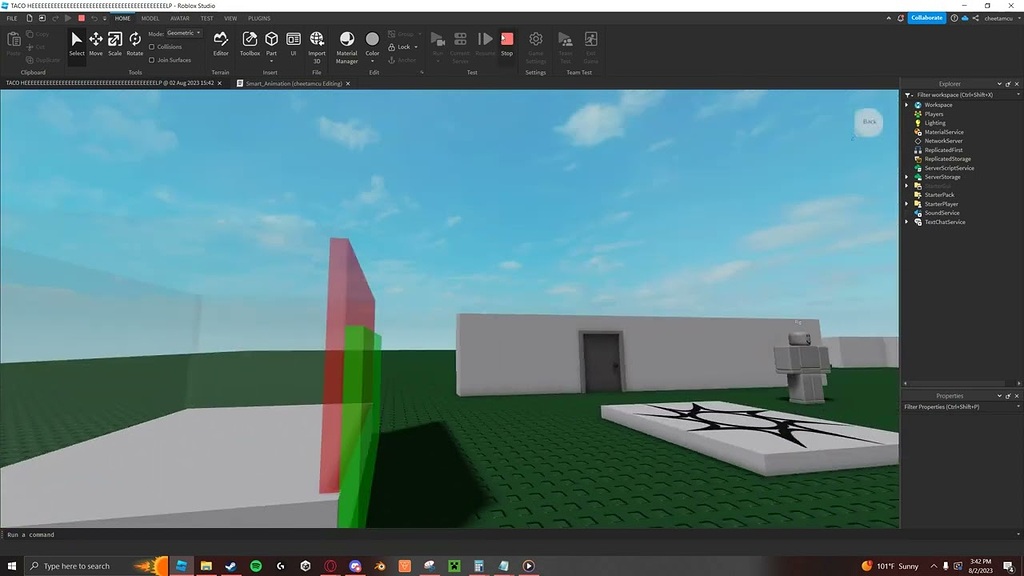
7 Moving A Brick With Position And CFrame Roblox Scripting . Drifting On A Brick Roblox Gameplay YouTube Hqdefault . How To Get Bricks Fast In The Battle Bricks Roblox March 2026 Get Bricks Fast In The Battle Bricks 768x419 . Punch Through Brick Wall . Smart Animations Animating Movement Community Resources Developer 2 1024x576
#2 Gallery animated brick move roblox


The Brick Roblox Animation YouTube . How To ADD ANIMATION TO MOVING NPC Roblox Studio Tutorial YouTube . Hit By A Brick Roblox Animation YouTube Maxres2 . HowToBasics How To Move A Brick In Roblox R Roblox . Unlocking Roblox Animation Power With Moon Animator Up To Date 2026
#3 Gallery animated brick move roblox

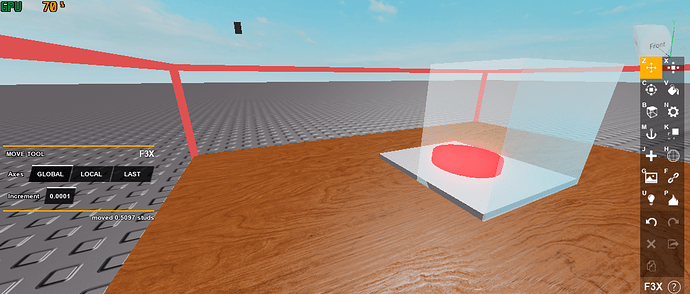


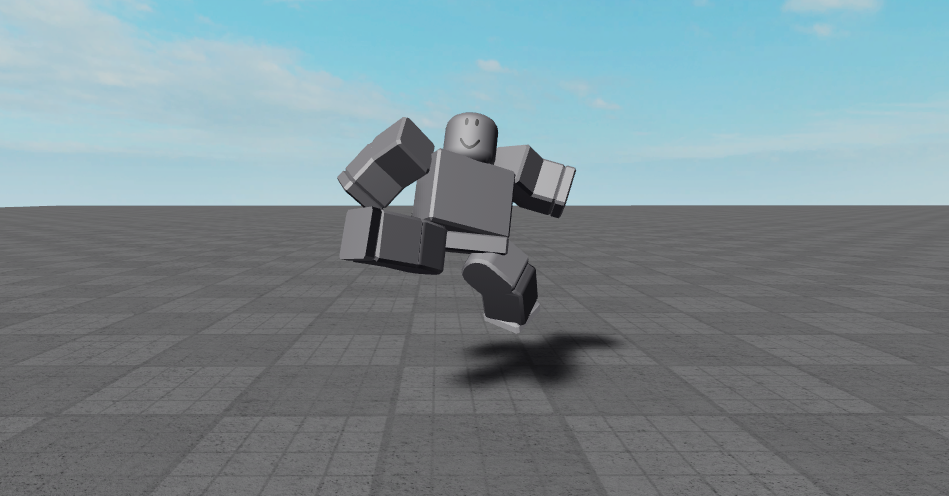
How To Make A Moving Kill Brick Roblox Studio Lite YouTube . How To Make A Moving Brick In Roblox Studio 2017 YouTube . Problem With Moving And Rotating A Brick Scripting Support 2 690x294 . How To Make An Animation In Roblox Animation 1 YouTube . Animating Two Rigs In Roblox Studio A Simple Guide 2 690x400
#4 Gallery animated brick move roblox
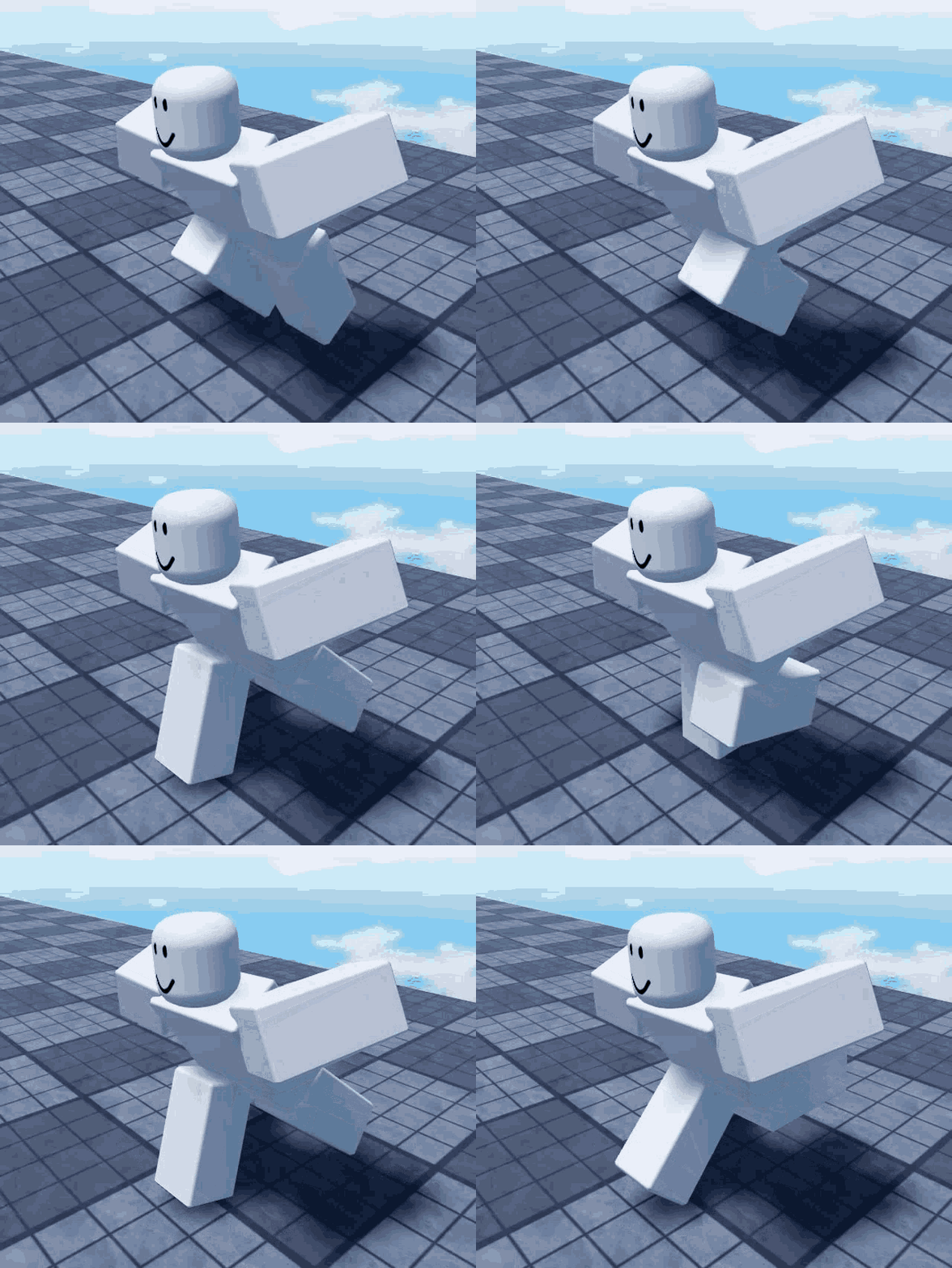


Create A Realistic Brick Texture In ROBLOX Studio Tutorial YouTube . Animating In Roblox In This Article I Will Explain How To By 1*jjji3C4T . Animation Roblox GIF Animation Roblox Descobrir E GIFs Animation Roblox . Tutorial The Battle Brick Animation Roblox YouTube Oar2 . Brick Roblox Animation YouTube
#5 Gallery animated brick move roblox
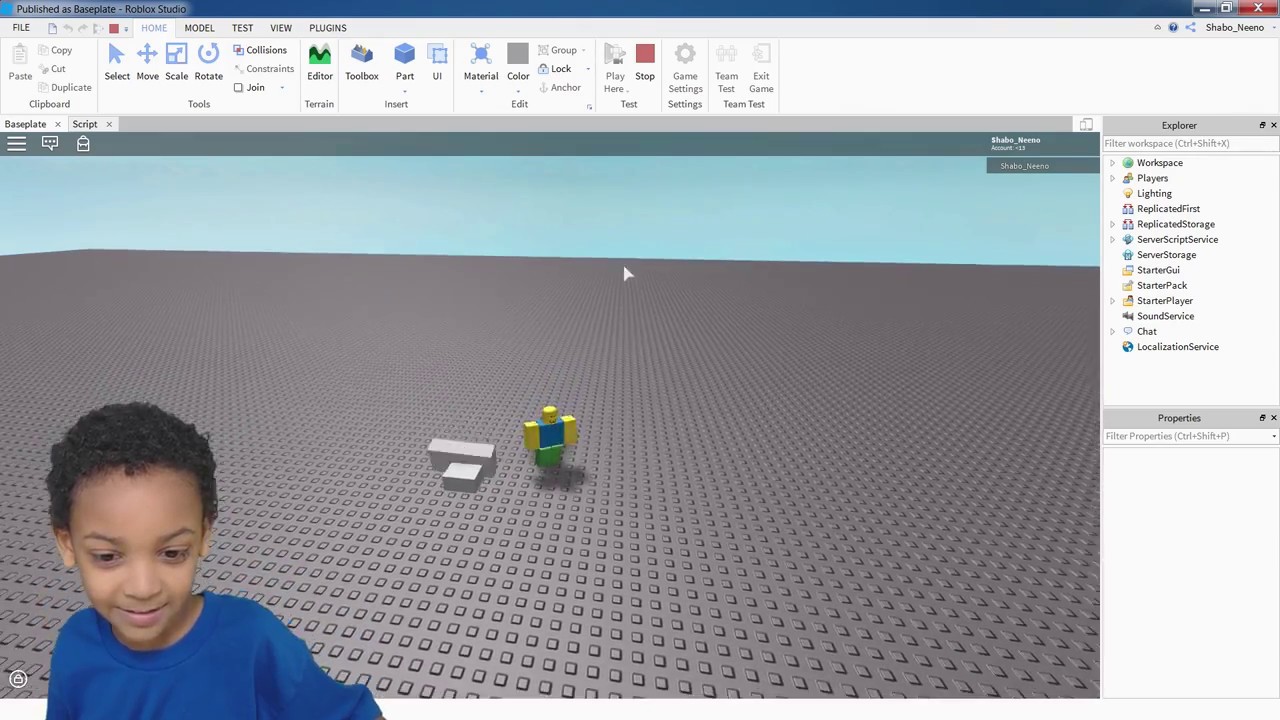


How Can I Move A Brick With Body Movers On Its Own Axis Building . How To Code A Moving Block In Roblox Studio YouTube . Evolution Of A Roblox Brick YouTube . Moving A Brick With Different Rotation Building Support Developer . ROBLOX The Movie 2024 Official Teaser Trailer Concept YouTube
#6 Gallery animated brick move roblox


What Happened To Pokemon Brick Bronze Roblox NYSNIB . How To Make A Moving Animation On Roblox YouTube . Kode Redeem Aktif Roblox 26 Januari 2026 Gratis Roblox 26 Januari 2026 Island Of Move Roblox. Roblox 2026 Soon Roblox Animation Oar2 . Animated Brick Face Roblox NoFilter
#7 Gallery animated brick move roblox


Roblox Animation GIF Roblox Animation GIF Leri Ke Fedin Ve Payla N Roblox Animation . Problem With Moving And Rotating A Brick Scripting Support . How To Prevent Lagging Jittering When Moving Object Scripting . Here S How To Make A Moving Kill Brick In Roblox Studio 2025 Tutorial Hqdefault . This Lesson Is Intended For Readers Who Are Brand New To Creating